
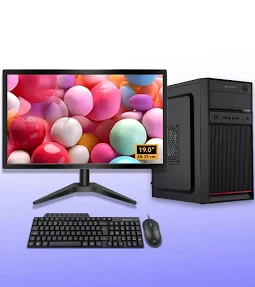
Computer: The Backbone of Modern Life
In today’s digital era, the computer has become far more than a machine—it is the foundation on which modern life operates. Whether it’s education, business, research, entertainment, or communication, computers have transformed every aspect of our world. This detailed blog is written for readers of kavya.uiit.in, who are eager to understand technology in a clear and simple way. History and Evolution of Computers The history of computers goes back to the 19th century when Charles Babbage, known as the “Father of Computers,” introduced the concept of the Analytical Engine. Although it never became a functioning machine, it laid the foundation of modern computing. The first true computers appeared in the 20th century. They were gigantic, slow, and extremely costly. Over the decades, computers evolved through different generations—from vacuum tubes to transistors, integrated circuits, and finally microprocessors. Each generation made computers smaller, faster, and more powerful. Today’s computers are compact, efficient, and capable of performing billions of operations in a single second. Readers on kavya.uiit.in often explore such technological advancements to broaden their knowledge. Basic Structure of a Computer A computer mainly consists of two parts: hardware and software. 1. Hardware Hardware refers to the physical components of a computer—parts you can touch. These include: Each component plays a unique role in processing and storing information. The overall performance of a computer heavily depends on its hardware quality. 2. Software Software is the set of programs that instruct a computer on what tasks to perform. Examples include: Many students rely on kavya.uiit.in to learn the difference between hardware and software in an easy-to-understand manner. Types of Computers Different types of computers serve different purposes: Each type is designed to meet specific demands, ranging from basic tasks to high-level computing. Uses of Computers Computers are used in nearly every field today: 1. Education Online classes, research, educational videos, and digital notes have made learning easier than ever. Platforms like kavya.uiit.in provide valuable information that helps students strengthen their computer skills. 2. Business Businesses use computers for everything: No modern business can function efficiently without computers. 3. Healthcare Computers support medical research, digital diagnostics, MRI scanning, patient data storage, and even robotic surgeries. 4. Entertainment From movie editing to gaming, music production to social media—computers play a central role in entertainment. 5. Research and Development Scientists use high-performance computers to study space, climate change, medicine, and more. Supercomputers solve extremely complex problems in minutes. Relationship Between Computers and the Internet A computer becomes truly powerful when connected to the internet. The internet has completely changed how we: Online platforms, blogs, and learning resources such as kavya.uiit.in help users access information anytime, anywhere. From email to cloud storage, everything is possible because of the strong connection between computers and the internet. Why Learning Computers Is Important Computer knowledge is no longer optional—it is essential. Knowing how to use a computer opens the door to countless opportunities. Benefits of learning computers: This is why many students regularly visit kavya.uiit.in to improve their digital knowledge and stay updated with important computing concepts. The Future of Computers The future of computers is exciting and full of innovation. Some emerging technologies include: Quantum computers, for example, have the power to solve problems that would take traditional computers thousands of years. AI is already influencing healthcare, finance, education, and many other fields. As technology progresses, computers will become even more intelligent, efficient, and deeply integrated into human life.